Our Ranch - Simple | Practical | Grass-Based
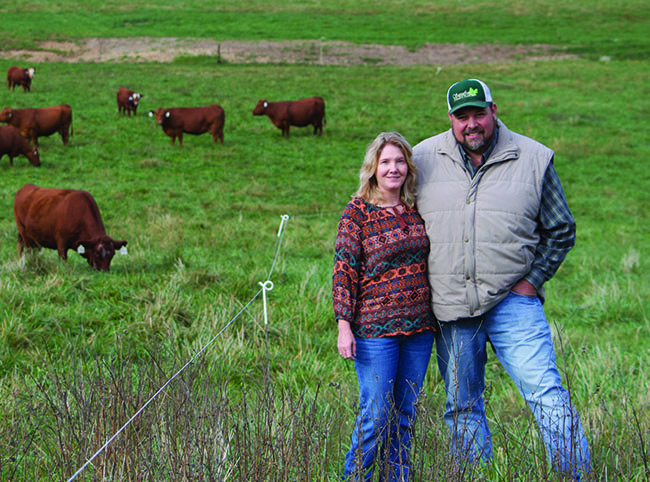
Sassafras Valley Ranch is a family-owned South Poll cattle and hair sheep operation near Belle, Missouri, operated by Bruce and Sunshine Shanks.
The ranch headquarters sits on 745 acres in the Ozark hills of Central Missouri. In addition to the home place, we rent ten other farms totaling approximately 1,200 acres. Today, the operation manages about 300 registered South Poll cattle and 200 hair sheep.
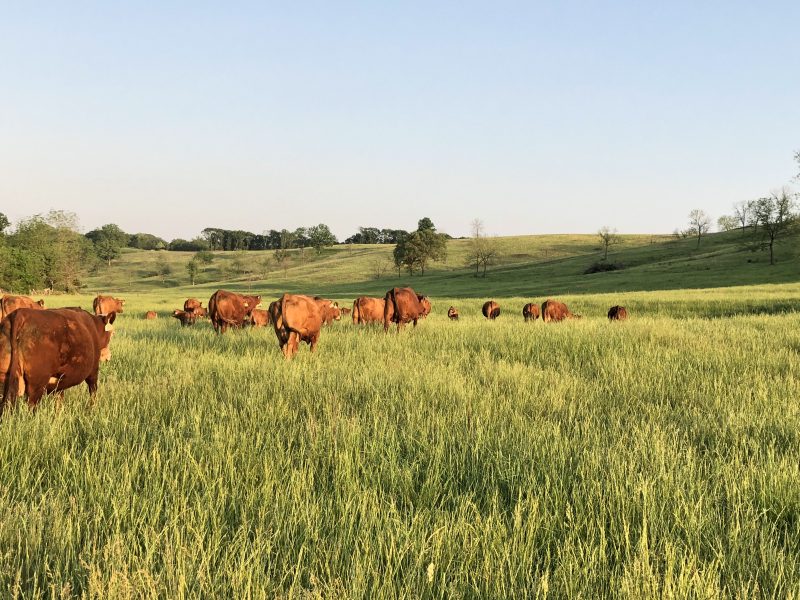
This is not flat, easy, pampered country. It is Ozark hill ground with fescue-based pastures, rocky ridges, hollers, timber, scattered farms, and the everyday challenges that come with managing livestock in the real world. That environment has shaped the way we think about cattle, sheep, grass, business, and the kind of livestock we want to produce.
At Sassafras Valley Ranch, our goal is simple: raise livestock that fit the land, improve the land we manage, and keep ranching practical enough to last.
We do not claim that our way is the only way. Every ranch is different. Every family, farm, forage base, and business has its own challenges. This is simply the system that has worked for us — a low-input, grass-based approach built around practical cattle, managed forage, disciplined selection, and a constant effort to keep things simple.
Our Story
Bruce and Sunshine both grew up in Missouri farm country. Bruce was raised around livestock and developed an early interest in animal breeding, genetics, and practical livestock production. He earned his M.S. in livestock genetics from Montana State University and his Ph.D. in animal science and meat science from South Dakota State University.
Those years in Montana and South Dakota exposed Bruce and Sunshine to different landscapes, livestock systems, and ways of thinking. Bruce’s academic background provided the science behind animal selection, but his philosophy has always remained grounded in practical, real-world livestock production.
A major turning point came in the early 2000s when Bruce had the opportunity to tour Deseret Ranches in Nebraska, then managed by Burke Teichert. That visit helped shape the way he viewed ranching as a business. The lessons were clear: control costs, manage grass, reduce unnecessary inputs, match livestock to the environment, and question whether every expense truly pays its way.
In 2003, Bruce and Sunshine moved to the small town of Belle, Missouri, and purchased the farm where their son, Paul, was raised. Paul and his wife, Lainyn, both work in the livestock industry and now live on one of the farms that is part of the Sassafras Valley Ranch operation.
Over time, SVR has grown through owned land, leased farms, livestock partnerships, and a willingness to use land that others might overlook. We believe there is power in grass, whether it is owned or leased. With practical fencing, water development, good relationships, and livestock that fit the environment, underutilized acres can become productive.
Why South Poll Cattle
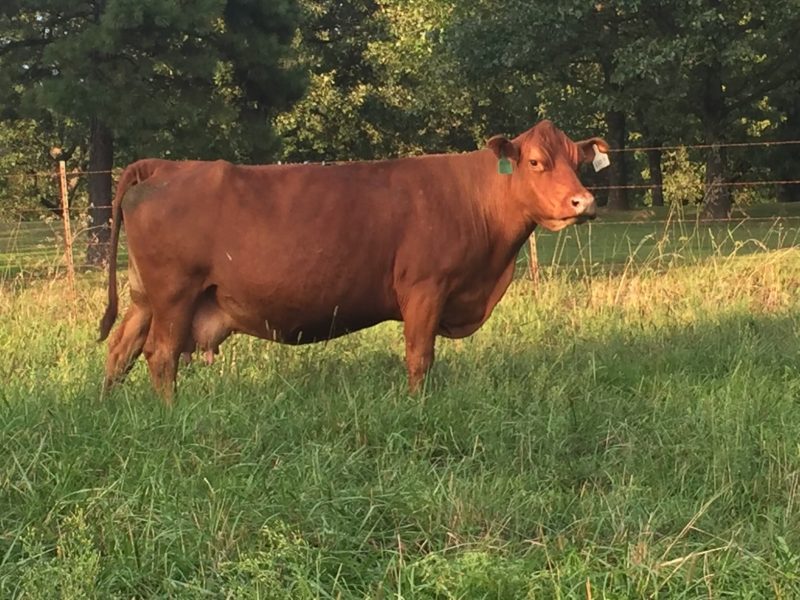
The centerpiece of Sassafras Valley Ranch is South Poll cattle.
Bruce has been involved with the South Poll breed from its early days and has served in leadership roles with both the National South Poll Grass Cattle Association and the Missouri South Poll Cattle Association. He has spent years helping promote and develop South Poll cattle as a practical option for producers who want fertile, gentle, grass-adapted cattle that can thrive with fewer inputs.
The South Poll breed fits our environment and our goals. Developed by Teddy Gentry of the band Alabama, South Poll cattle were created for hot, fescue-based environments while still producing quality beef. That combination fits the Ozark hills well. We need cattle that can handle heat, fescue, hills, grass, and a low-input system.
At SVR, we are not chasing extremes. We are not trying to raise the biggest cow, the heaviest-milking cow, or cattle that require an expensive support system to perform. We believe in optimums.
Moderate size. Enough milk, but not too much. Fertility off grass. Slick hair. Soundness. Gentle disposition. Easy fleshing ability. Longevity. Hardiness. Adaptability.
The cow that fits our ranch is simple to describe but hard to build: she breeds, raises a good calf, holds her condition, stays gentle, and does it again the next year without being pampered.
Fertility is where we draw the line. Open cows are sold. It does not matter how pretty they are, how good they used to be, or how much we like them. If they do not breed back in our system, they do not stay in the herd.
Bull selection starts with the cow behind the bull. A bull prospect must come from a cow that has already proven she can work here. After that, we look for the same practical traits we want in the cow herd: slick hair, capacity, muscle, moderate size, soundness, and a good disposition. We are still in the beef business, but we want beef cattle that can produce without making the operation complicated.
The cattle we offer are raised in the same kind of system we expect them to work in. We want our bulls and females to be useful to commercial cattlemen, grass-based producers, seedstock breeders, and families who want cattle that simplify their operation rather than add more work to it.
How the Ranch Works
Sassafras Valley Ranch is a low-input operation, but that does not mean it is a no-management operation. In many ways, low-input cattle require more discipline, more observation, and more willingness to make hard decisions.
Our cow herd is built around grass, hay when needed, good water, a simple mineral program, and practical forage management. We do not use feed in the cow herd. We do not build the operation around tubs, cubes, grain, soy pellets, expensive forage programs, or complicated supplement systems. We keep practical, affordable mineral available to the cattle and try not to create a system that depends on fancy products to make the cows work.
That does not mean there is no thought behind the system. There is a lot of thought behind it. We study the cattle, the grass, the weather, the stocking rate, the time of year, and the farms we are working with. But we also try to stay practical.
Our farms are spread out. There is always a fence to fix, water to check, cattle to move, sheep to manage, records to keep, or another job waiting. Some farms allow for more frequent moves and tighter grazing management than others. Some places require a simpler approach. We try to manage forage in a way that gets the most out of what is available without making the system too complicated to actually work.
Cattle are moved often, and forage is managed with purpose, but we are not trying to build a system that requires extreme moves multiple times a day or a long list of specialty forages. We want practical grazing management that fits the land, the labor, the water, the fencing, and the season.
The idea is simple: use the grass, rest the grass, leave enough residual, keep cattle in practical groups, and move them in a way that improves utilization without overwhelming the people doing the work.
In our part of Missouri, we are blessed with fescue — or cursed with it, depending on the day. Either way, it is what we have. Rather than constantly fighting the farm, we try to manage what we have and select cattle that can handle it.
Water and fence are two places where we are willing to invest. Good water and practical fencing make grazing possible. They also allow us to use leased land and underutilized ground that many people overlook. Polywire, electric fence, and developed water systems give us flexibility across a scattered operation.
We also believe stocking rate matters. Extra grass is not wasted when the weather turns dry. It is insurance. Overstocking creates feed problems, hay problems, fertility problems, drought problems, and stress. For us, practical grazing starts with giving the land and livestock enough room to work.
Hay and Winter Strategy
Stored feed is one of the largest costs in a cow-calf operation, so we try to keep hay use as practical and efficient as possible.
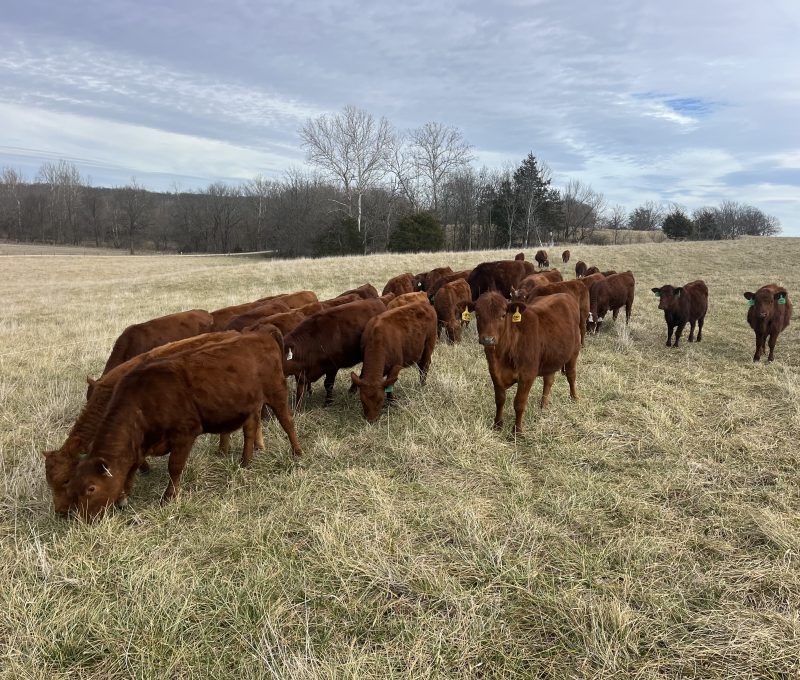
Our preference is always to graze longer when the forage is there. In the fall and winter, grazing management becomes especially important. Stockpiled forage, mature grass, strip grazing, and careful pasture planning can all help reduce the number of days cattle depend on hay.
When we do feed hay, we try to make it work for the ranch instead of against it. Hay is fed with a purpose: to keep cattle in good condition, spread nutrients, improve thin areas, reduce equipment use, and avoid unnecessary ruts or wasted time.
Depending on the farm and weather, we may unroll hay, stage bales ahead of winter behind polywire, or use bale grazing in areas that need improvement. The goal is not to make hay feeding complicated. The goal is to handle hay as few times as possible and use winter feeding as another tool for land management.
A Simple Recipe
One of Bruce’s favorite quotes is, “The ranching business is a simple business. The hard part is keeping it simple.”
That quote describes Sassafras Valley Ranch well.
Calves are born on pasture, weaned on pasture, and developed on grass. Heifers are treated like the cows we expect them to become. Bulls are developed in a practical system that reflects the kind of environment many of our customers are trying to build.
We do not want to prop cattle up and then pretend we know whether they will work. If cattle are developed under conditions they will never see again, it becomes harder to know what they truly are. At SVR, cattle are expected to prove themselves in the same kind of system we expect them to work in.
We also keep cattle handling as simple as possible. On much of the operation, cows are gathered, calves are weaned, and pregnancy checking is done in one trip through the chute. Open cows are sold. Bred cows that do their job stay.
Calving time is also part of the system. At Sassafras Valley Ranch, calves are born in April and May and weaned in November. That timing fits our land, labor, grazing system, and winter management. Calving on pasture during better weather reduces the need for barns, bedding, constant intervention, and cold-weather emergencies. It also places the cow’s highest nutritional demand closer to the time of year when grass is working for us.
Again, that does not mean every ranch should follow the same calendar. It means our calendar is built around our forage, our labor, our business, and the cattle we want to raise.
Sheep, Stewardship, and the Land
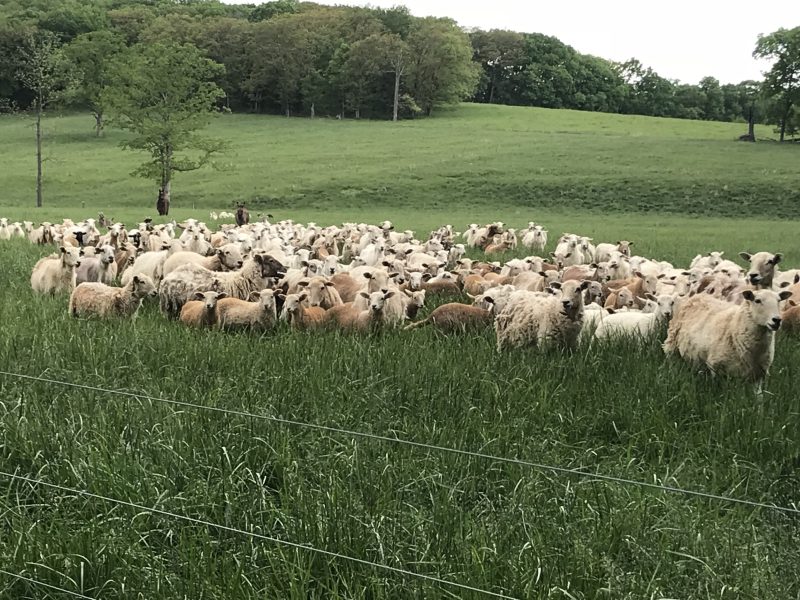
Hair sheep are an important part of Sassafras Valley Ranch. They add diversity, help spread risk, improve cash flow opportunities, and utilize forage differently than cattle.
The goal is not to add enterprises just to add complexity. The goal is to add enterprises that complement the land, labor, and main mission of the ranch. Like our cattle, our sheep are managed with a practical, grass-based mindset.
Good grazing is not just about livestock. It is also about soil, water, forage, wildlife, and long-term stewardship.
Bruce and Sunshine have worked with conservation partners over the years on water systems, fencing, pasture improvement, erosion control, wildlife habitat, woodland management, clover establishment, and native grass projects. We view conservation as part of good ranch management.
The goal is to leave the land healthier, more productive, and better suited for the next generation.
Ranching as a Business
Sassafras Valley Ranch is a livestock operation, but it is also a business.
Low-cost production is not just about cattle and grass. It is also about debt, machinery, time, planning, records, cash flow, and knowing what not to do.
We try to stay focused on what we do best. We do not have to own every machine, build every fence, haul every load, or fix every piece of equipment ourselves. Sometimes the low-cost decision is to hire the right person, avoid the wrong purchase, or simply not do something at all.
That same mindset applies to time. Planning, records, finances, grazing decisions, and organization matter. A ranch can lose money through clutter, poor planning, wasted trips, unnecessary work, and decisions made only because “that is how we have always done it.”
Tradition has value, but tradition alone is not a good enough reason to keep doing something. We believe in keeping an open mind, learning from others, questioning our own habits, and constantly looking for ways to simplify.
A Place to Learn
Sassafras Valley Ranch has always been a working ranch first, but over time it has also become a place for learning.
Because of Bruce’s background in animal science, livestock genetics, and meat science, SVR has served as a practical livestock research site for small agribusinesses and nutrition companies. Over the years, research and field work on the ranch have included cattle, sheep, goats, hogs, and poultry.
The ranch has also hosted visitors, pasture walks, field days, agritourism groups, producer conversations, and industry discussions. Bruce has shared the SVR philosophy through videos, podcasts, interviews, cattle publications, South Poll association work, and one-on-one visits with producers.
We do not share our story because we think we have everything figured out. We share it because ranchers learn from other ranchers. The people who visit SVR often want to know the “why” behind the decisions: why South Poll cattle, why low inputs, why managed grazing, why simple mineral, why no feed, why calve later, why lease land, and why keep things practical.
Those conversations are part of what we enjoy most.
Our hope is that people leave Sassafras Valley Ranch with ideas they can take home and adapt to their own land, their own livestock, and their own goals.
Family and Agriculture
Sassafras Valley Ranch is rooted in family, livestock, land, and agriculture education.
Bruce spends most of his time on the farm. When he is not working cattle, moving livestock, planning grazing, or thinking about the next improvement, he is usually outdoors hunting, fishing, or gardening.
Sunshine is an important part of both the ranch and the education side of the family’s agriculture story. In addition to helping around the farm and garden, she has spent 25 years teaching local students. She is passionate about helping young people understand farming, food production, and rural life.
Sunshine has written two children’s books, The Perfect Barn and One Thousand Black Walnuts, to help students better understand agriculture and where their food comes from. Through books, classroom projects, agriculture education, and hands-on learning opportunities, she helps connect the next generation to the farm.
For our family, agriculture is not just what happens inside the fence. It is also something to share, explain, and pass on.
What We Offer
Sassafras Valley Ranch offers South Poll genetics raised in a real-world, grass-based system.
We sell practical bulls and females with a focus on cattle that are gentle, moderate, fertile, and adapted to a simpler system. Our customers include commercial cattlemen, grass-based producers, seedstock breeders, and families looking for cattle that can make their operation easier rather than more complicated.
We also offer something harder to put in a sale catalog: the chance to see the system behind the cattle.
Visitors are welcome to come see the ranch, the cows, the sheep, the grazing system, the hills, the fescue, the water systems, and the way we try to make it all work together. We believe the story behind the cattle matters. How they are raised matters. The environment they come from matters.
At the end of the day, Sassafras Valley Ranch is built around a simple idea:
Raise livestock that fit the land, manage the land with care, keep the business practical, and stay humble enough to keep learning.
We are passionate about South Poll cattle, grass-based livestock, practical ranching, agriculture education, and the future of family farms.
Visitors are always welcome at Sassafras Valley Ranch.